


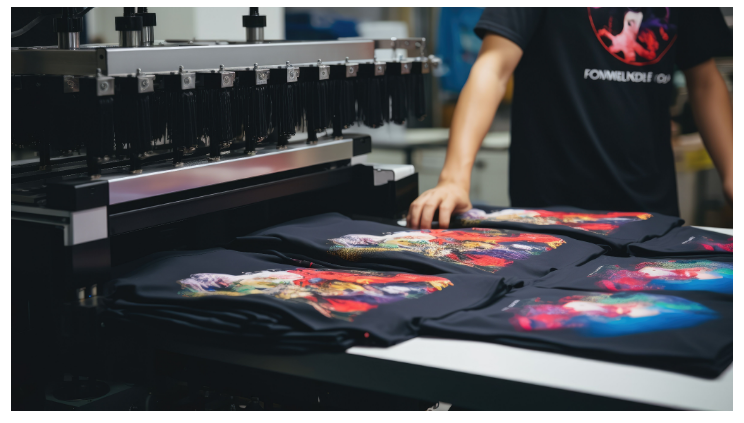
The Hidden Physics of Textile Preparation
A cheap promotional t-shirt is often woven from open-end carded cotton, which leaves loose fibers on the surface. Under heat and pressure, these stray fibers prevent adhesives from making full, uniform contact with the weave.
Why Surface Tension and Yarn Density Determine Print Success
Professional decorators rely on combed and ring-spun cotton, which aligns the fibers and creates a dense, flat canvas. Paired with high-grade smart blanks, this structure lets the graphic integrate smoothly rather than sit rigidly on top of the fabric. Yarn density also dictates thermal tolerance: lighter fabrics need precise temperature calibration to prevent scorching.
Avoiding Common Scorching and Bleed Errors
Even minor temperature deviations across the platen cause uneven adhesive curing. On poly-blends, excessive heat triggers dye migration, so use careful press settings and anti-migration layers where appropriate.
The Technical Evolution of Heat Applied Graphics
Screen printing suits massive single-design orders but lacks the flexibility of on-demand e-commerce. Direct-to-garment printing adds complex maintenance and inconsistent results on blended fabrics.
Breaking Down How Dtf Transfers Work at a Molecular Level
The industry has shifted toward dtf transfers for their versatility and vibrant color. Artwork is printed onto a release film with water-based pigment inks, then coated with thermoplastic polyurethane adhesive powder. Once cured, the adhesive melts into the yarn when pressed, forming a robust bond that flexes with the fabric without cracking.
Comparing Film Peel Techniques: Hot, Warm, and Cold
Hot-peel films allow rapid production, while cold-peel films require complete cooling so the ink sets perfectly. Ignoring manufacturer guidelines results in torn graphics and blurred edges.
Optimizing Your Studio Workflow for High-Volume Customization
Essential Equipment Calibration and Platen Care
Your heat press is your most critical machine. Check platen temperature with an infrared thermometer, test pressure with carbon paper, and wipe residual adhesive off the warm platen.
Humidity Control and Ambient Moisture Management
Damp garments turn trapped water into steam under heat, pushing against the adhesive bond. Pre-pressing the blank for three to five seconds vaporizes moisture and flattens creases, guaranteeing a clean, permanent seal.


Why Brand Foundations Depend on Custom Premium Shirt
Brand identity requires consistency in your supply chain; a different cut, weight, or collar in a new batch instantly lowers perceived quality. Sourcing your foundational inventory through Custom Premium Shirt ensures every item meets strict quality standards. When customers experience the luxurious feel and durable fit of Custom Premium Shirt products, they become loyal brand advocates.
Frequently Asked Questions
What causes adhesive powder to clump or fail during curing?
Excessive humidity or uneven heating. Keep temperature even and store powder in a sealed, dry container.
How do you prevent fabric scorching on delicate synthetic blends?
Lower the press temperature and buffer the heat with a Teflon sheet or parchment paper.
Why is pre-pressing necessary before applying digital film graphics?
It removes trapped moisture and creases that would otherwise create steam pockets and weaken the adhesive bond.
Can you layer multiple film transfers on a single garment?
It is discouraged, as thick layers reduce breathability. Compose multi-element designs in a single file instead.
Start building your next collection today with Custom Premium Shirt.